
Blog Summary
AI-generated content often struggles with Google indexing due to quality issues, lack of E-E-A-T, or technical SEO problems. Fixing this involves humanizing content, improving relevance and depth, and ensuring all technical SEO elements are optimized. By focusing on helpful, unique content, you can overcome indexing challenges and improve your visibility on Google.
Introduction
You have invested time and resources into creating AI content, but it is not showing up in Google search results. This is a common frustration for many digital marketers and content creators today. The promise of rapid content generation clashes with the reality of Google’s algorithms, which prioritize helpful, high-quality, and trustworthy information. When your AI content fails to index, it means it is essentially invisible to your target audience. Understanding why this happens and how to fix it is crucial for leveraging AI effectively in your content strategy.
Why AI Content Might Not Index
Google aims to show users the most relevant and helpful content. AI-generated text, especially when used without careful oversight, can fall short of these standards, leading to indexing issues.
Quality and Uniqueness Deficiencies
One of the primary reasons AI content struggles to index is its perceived quality. If the content is generic, repetitive, or lacks unique insights, Google may deem it unhelpful. Thin content, which provides little value beyond surface-level information, is often overlooked by search algorithms. AI models can sometimes produce text that sounds fluent but does not offer new perspectives or deep analysis.
Lack of E-E-A-T Signals
Google’s E-E-A-T guidelines (Experience, Expertise, Authoritativeness, Trustworthiness) are critical for content ranking and indexing. AI-generated content inherently lacks personal experience or a verifiable expert author. Without clear signals of expertise or a trusted source, Google may be hesitant to index and rank the content, especially for YMYL (Your Money Your Life) topics where accuracy and reliability are paramount. Human oversight is essential to imbue content with these crucial attributes.
Technical SEO Roadblocks
Even high-quality content can fail to index if technical issues prevent Google from crawling or understanding it. Common technical problems include:
- Robots.txt Blocking: Your robots.txt file might be accidentally telling search engines not to crawl certain pages or sections of your site.
- Noindex Tags: Pages might have “noindex” meta tags, explicitly instructing Google not to index them.
- Sitemap Issues: An outdated, incomplete, or incorrectly submitted sitemap can hinder discovery of new content.
- Slow Page Speed: Extremely slow loading times can discourage crawlers from fully processing your pages.
- Duplicate Content: If AI tools generate very similar content across multiple pages, Google might view it as duplicate and choose not to index all versions.
Google’s Stance on AI-Generated Content
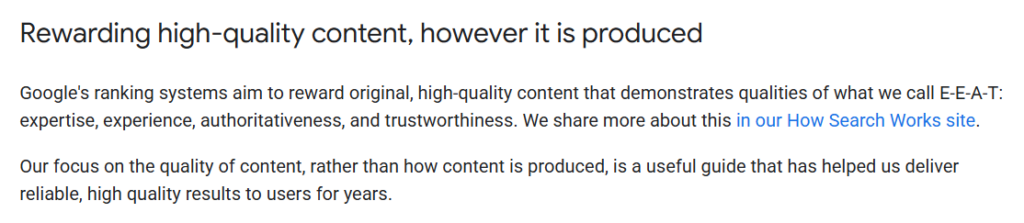
Google has clarified its position on AI content, stating that it does not penalize AI content specifically but focuses on its helpfulness and quality. According to Google Search Central, any content, regardless of how it is produced, that is created primarily to manipulate search rankings rather than help users, goes against their guidelines. This means AI content that is thin, spammy, or lacking in E-E-A-T is unlikely to be indexed.
Diagnosing Indexing Problems with Google Search Console

The first step to fixing non-indexing content is to understand why it is not indexing. Google Search Console (GSC) is your most powerful tool for this diagnosis.
Using the Coverage Report
Navigate to the “Indexing > Pages” report in GSC. This report shows you which pages are indexed, which are not, and why. Look for “Excluded” pages and review the reasons provided, such as:
- Crawled – currently not indexed
- Discovered – currently not indexed
- Blocked by robots.txt
- Noindex tag detected
- Soft 404
- Duplicate, Google chose different canonical than user
Understanding these specific reasons will guide your corrective actions.
Inspecting Individual URLs
Use the URL Inspection Tool at the top of GSC. Enter the URL of a page that is not indexing. This tool provides real-time information about Google’s view of the page, including its index status, crawl errors, and mobile usability. If the page is not indexed, you can request indexing directly from this tool after making improvements. This tool can also confirm if Google found a “noindex” tag or a robots.txt block.
Strategies to Fix Non-Indexing AI Content

Once you have identified the root causes, you can implement targeted fixes. These strategies often involve a blend of content enhancement and technical optimization.
Humanize and Enhance Content for E-E-A-T
This is perhaps the most critical step for making AI content indexable and rankable. AI content should serve as a strong draft, not a final product.
- Add Unique Insights and Perspective: Infuse the content with your brand’s voice, unique research, case studies, or personal anecdotes. This demonstrates experience and differentiates your content from purely AI-generated text. This step is key to making your content stand out and can be explored further in an AI humanize Google guide.
- Fact-Checking and Original Research: Verify all facts, statistics, and claims. Add original data, interviews, or expert quotes to bolster expertise and trustworthiness.
- Demonstrate Expertise: Ensure author bios are visible and establish credibility. Link to other credible sources where appropriate.
- Refine Language and Flow: Edit for clarity, conciseness, and natural language. Remove any repetitive phrases or awkward wording that often appears in raw AI outputs. Vary sentence structures and paragraph lengths to improve readability.
- Incorporate Visuals and Multimedia: Add relevant images, videos, infographics, or custom charts. These elements enhance user experience and can convey information more effectively than text alone.
Remember, Google’s Helpful Content System targets content that is primarily created for search engines rather than people. Ensuring your content truly helps users is paramount.
Optimize for Technical SEO
Addressing technical issues ensures Google can find, crawl, and understand your improved content.
- Review Robots.txt and Noindex Tags: Double-check your robots.txt file to ensure no important pages are inadvertently blocked. Remove any “noindex” meta tags from pages you want indexed.
- Submit and Update Sitemaps: Ensure your XML sitemap is up-to-date and correctly submitted through Google Search Console. If you have added new content, regenerate and resubmit your sitemap.
- Improve Page Speed and Mobile-Friendliness: Use tools like Google PageSpeed Insights to identify and fix issues slowing down your site. Ensure your site is fully responsive and offers a good experience on mobile devices.
- Manage Duplicate Content: Use canonical tags to tell Google which version of a page is the preferred one, especially for similar AI-generated variations. This helps consolidate ranking signals.
- Enhance Internal Linking: Strategically link to other relevant pages on your site. This helps Google discover new content and passes authority between pages. Consider linking to related guides like our AI SEO content guide for comprehensive coverage.
Content Strategy Adjustments
Sometimes, the problem lies not just in the content itself but in the overall strategy.
- Target Low-Competition Keywords: Focus on long-tail keywords or niche topics where it is easier for new content (even AI-assisted) to gain traction.
- Create Comprehensive, Long-Form Content: Instead of many short, shallow articles, aim for fewer, more in-depth pieces that thoroughly cover a topic. This demonstrates expertise and provides more value.
- Promote Your Content: Do not just publish and wait. Share your content on social media, in email newsletters, and explore outreach opportunities for backlinks. This increases visibility and signals importance to search engines. For broader strategies, consider how AI tools in digital marketing can assist with promotion and analysis.
Monitoring and Iteration

SEO is an ongoing process. After implementing changes, continue to monitor your pages in Google Search Console. Look for changes in the “Indexing > Pages” report. If pages start getting indexed, great. If not, re-evaluate your diagnosis and continue iterating on your content and technical SEO. This continuous improvement mindset is crucial for long-term success with AI content rank fix efforts.
Conclusion
Having AI-generated content not index can be disheartening, but it is a solvable problem. The key lies in understanding Google’s core objectives: to provide helpful, trustworthy, and high-quality information to its users. By diligently humanizing your AI content, infusing it with genuine E-E-A-T, and ensuring your technical SEO is flawless, you can overcome indexing hurdles. Treat AI as a powerful assistant, not a replacement for human creativity and oversight. This approach will lead to content that not only indexes but also genuinely engages your audience and drives organic traffic.
Frequently Asked Questions
Google might not index your AI content if it perceives it as low quality, lacking E-E-A-T (Experience, Expertise, Authoritativeness, Trustworthiness), or if technical SEO issues prevent crawling and indexing. Generic, thin, or duplicate content is often overlooked by search algorithms.
To make AI content more indexable, humanize it by adding unique insights, personal experience, and thorough fact-checking. Ensure strong E-E-A-T signals, optimize for technical SEO issues like sitemaps and robots.txt, and focus on creating truly helpful, comprehensive content.
Google does not penalize content solely because it is AI-generated. Instead, Google’s algorithms focus on the helpfulness and quality of the content, regardless of its creation method. Content created primarily to manipulate search rankings, whether human or AI-generated, is against their guidelines.
E-E-A-T is crucial for AI content indexing because Google prioritizes content from experienced, expert, authoritative, and trustworthy sources. AI tools cannot inherently provide these signals, so human editors must infuse content with unique perspectives, original research, and clear author credibility to satisfy E-E-A-T requirements.
You can check if your AI content pages are indexed using Google Search Console. Go to the “Indexing > Pages” report or use the URL Inspection Tool for specific pages. This will show you the indexing status and any reasons why a page might be excluded.