Why Startup Marketing Looks Different in 2026
Digital marketing for startups has changed dramatically. Ranking on Google is still important, but it’s no longer the only way potential customers discover businesses.
AI-powered search experiences from platforms like ChatGPT, Perplexity, and Google’s AI-generated search results increasingly provide answers directly without requiring users to click through to websites. Studies show that nearly 60% of searches now end without a click, making visibility inside search results and AI-generated answers just as important as traditional rankings.
For startups with limited budgets, this creates both a challenge and an opportunity. Companies that build authority, publish helpful content, and become trusted sources can gain visibility across both search engines and AI answer engines without competing against enterprise-sized marketing budgets.
This guide explains how startups can build a digital marketing system that drives growth through search, content, social media, paid acquisition, and AI visibility.
Startup Marketing Statistics for 2026
- Nearly 60% of searches now end without a website click, largely due to AI-generated answers and search features.
- AI-powered search experiences continue expanding globally across search engines and AI assistants.
- 94% of marketers plan to use AI in content creation workflows in 2026.
- Content marketing remains one of the most cost-effective growth channels for startups with limited budgets.
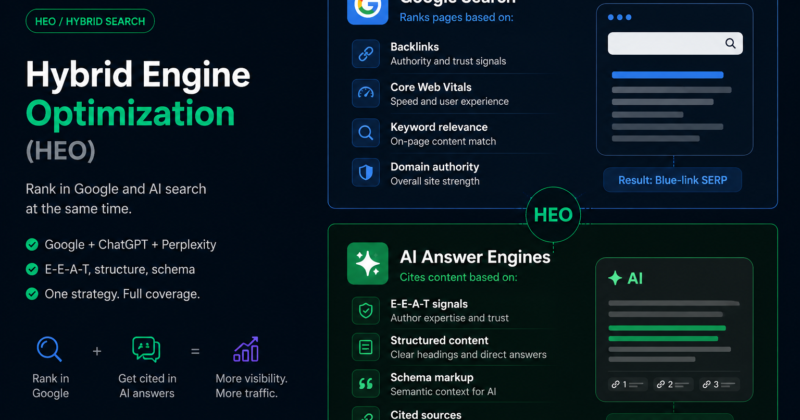
SEO vs AI Visibility: What’s the Difference?
| SEO | AI Visibility |
|---|---|
| Goal: Rank pages | Goal: Get cited in AI answers |
| Measured by rankings | Measured by mentions and citations |
| Google is primary source | AI systems use multiple sources |
| Focus on keywords | Focus on expertise and authority |
| Clicks are success metric | Citations and recommendations are success metrics |
Why Startups Need Both
A startup can rank highly in search results and still receive little visibility in AI-generated answers.
Likewise, some brands are frequently cited by AI systems because they have strong authority, trusted mentions, and comprehensive content coverage.
The most effective startup marketing strategy combines traditional SEO with AI visibility optimization.
The Foundation: Know Your Audience and Value
Before you even think about social media posts or ad campaigns, you must deeply understand who you’re trying to reach. This foundational step dictates every marketing decision you’ll make, ensuring your efforts resonate with the right people.
Take the time to create detailed buyer personas. Think about their demographics, pain points, aspirations, and where they typically look for solutions. Knowing these details helps you tailor your messages precisely.
Defining Your Unique Value Proposition (UVP)
What makes your startup different? What specific problem do you solve better than anyone else? Your Unique Value Proposition (UVP) is the core reason customers should choose you.

Articulate your UVP clearly and concisely. This isn’t just about features; it’s about the tangible benefits and superior experience you offer. Your UVP should be woven into all your marketing materials.
The Startup Growth Stack Framework
Instead of trying every marketing channel, successful startups focus on five layers of growth:
Layer 1: Foundation
Before spending money on marketing, ensure you have:
- Fast website
- Mobile-friendly design
- Analytics tracking
- Search Console setup
- Conversion-focused landing pages
Without measurement, growth becomes guesswork.
Layer 2: Discovery
This is how customers find your business:
- Google Search
- AI Search Engines
- Industry directories
- Review websites
- Communities
The goal is simple: appear wherever potential customers look for solutions.
Layer 3: Authority
Authority is what separates startups that get ignored from startups that get recommended.
Build authority through:
- Expert content
- Original research
- Customer success stories
- Industry mentions
- Quality backlinks
Research shows that authority and existing web presence remain strong predictors of AI visibility.
Layer 4: Distribution
Content only works if people see it.
Focus on:
- Email marketing
- Communities
- Partnerships
- Organic social media
Layer 5: Measurement
Track:
- Leads generated
- Conversion rates
- Customer acquisition cost
- Search visibility
- AI visibility
The startups that grow fastest continuously measure and improve.
The 3 Signals AI Systems Use to Trust Brands
Research into AI search behavior shows that brands appearing most often in AI-generated answers typically demonstrate three characteristics:
Signal 1: Expertise
Publish content that demonstrates real-world experience and subject-matter knowledge.
Signal 2: Authority
Earn mentions, citations, backlinks, and references from trusted websites.
Signal 3: Consistency
Publish content consistently and cover topics deeply rather than sporadically.
When expertise, authority, and consistency work together, both search engines and AI systems are more likely to recognize a brand as a trusted source.
Building Your Digital Home: Website and SEO
Your website serves as your digital storefront, your 24/7 salesperson, and the hub for all your online activities. It needs to be professional, user-friendly, and optimized for search engines.
Even with a tight budget, invest in a clean, responsive website that clearly communicates your UVP and makes it easy for visitors to take action. Mobile-friendliness is non-negotiable for modern audiences.
Startup SEO Strategy
SEO remains one of the highest ROI marketing channels for startups because it creates long-term traffic assets.
Focus on three core areas:
1. Commercial Pages
Create pages targeting buying-intent searches such as:
- startup marketing strategy
- startup SEO services
- startup lead generation
- startup growth marketing
2. Educational Content
Create content answering questions your audience is already searching for:
- How much should a startup spend on marketing?
- SEO vs PPC for startups
- How long does startup SEO take?
- Best marketing channels for startups
3. Topical Authority
Rather than publishing random articles, cover an entire topic comprehensively.
For example, if your startup serves SaaS companies, create content covering SaaS SEO, SaaS content marketing, SaaS lead generation, SaaS analytics, and SaaS growth strategies.
Search engines and AI systems are more likely to trust websites that demonstrate deep expertise across a subject area.
Content Marketing: Educate, Engage, Convert
Content marketing is about creating and distributing valuable, relevant, and consistent content to attract and retain a clearly defined audience. For startups, it’s a powerful way to build trust and establish expertise without a massive ad budget.
Consider starting a blog that addresses common questions or pain points related to your industry. Share insights, offer solutions, and provide helpful resources. This positions your startup as a thought leader.
Beyond blog posts, think about creating short videos, infographics, or simple guides. The goal is to provide value, demonstrate your knowledge, and subtly guide prospects towards your offerings.
Smart Growth: Social Media and Paid Advertising
Social media offers a direct line to your audience, allowing for engagement and community building. Paid advertising, when done right, can provide immediate visibility and targeted reach.
Leveraging Social Media Effectively
Don’t try to be everywhere. Identify the one or two social media platforms where your target audience is most active and focus your efforts there. Consistency in posting and genuine engagement are key.
Share your content, engage with comments, and participate in relevant conversations. Social media is also an excellent channel for listening to customer feedback and understanding market sentiment.
Strategic Paid Campaigns for Quick Wins
While organic growth takes time, paid advertising can deliver immediate results by putting your message directly in front of highly specific audiences. Platforms like Google Ads and social media ads offer precise targeting options.
Start with a small, test budget and focus on campaigns with clear conversion goals, such as lead generation or direct sales. Monitor your campaigns closely and optimize based on performance data to maximize your return on investment.
| Strategy Type | Key Benefits for Startups | Considerations for Startups |
|---|---|---|
| Organic Marketing (SEO, Content, Social) | Builds long-term authority, cost-effective over time, sustainable growth. | Slower results, requires consistent effort, deep content knowledge. |
| Paid Marketing (PPC, Social Ads) | Immediate visibility, precise targeting, scalable results, fast testing. | Can be expensive, requires careful budgeting, risk of low ROI if not optimized. |
AI Search Optimization for Startups
Traditional SEO focuses on ranking webpages. AI visibility focuses on becoming a trusted source that AI systems can cite and recommend.
As AI assistants increasingly influence buying decisions, startups must optimize content not only for search engines but also for machine-generated answers.
How Startups Can Increase AI Visibility
Create Answer-Focused Content
Instead of writing broad marketing articles, create pages that directly answer specific questions.
Example:
- How much should a startup spend on marketing?
- SEO vs PPC for startups
- How to generate B2B leads as a startup
Add Strong FAQ Sections
AI systems frequently use structured FAQ content when generating answers.
Publish Original Insights
Original frameworks, benchmarks, case studies, and research are more likely to be referenced than generic advice.
Build Topical Authority
Cover an entire topic deeply rather than publishing isolated articles.
Strengthen Brand Mentions
Research suggests that strong web presence, backlinks, and community mentions contribute significantly to discoverability in AI-driven search experiences.
Conclusion
Startup marketing in 2026 is no longer just about ranking on Google.
Customers increasingly discover businesses through AI-powered search engines, recommendation systems, communities, social platforms, and traditional search results. Success comes from building authority that can be discovered, trusted, and referenced across all of these channels.
The startups that win are not necessarily the ones spending the most money. They are the ones creating the most useful content, demonstrating genuine expertise, and becoming trusted sources of information within their market.
Focus on building authority, not just traffic.
When authority grows, rankings, citations, leads, and customers tend to follow.
FAQs
The most important channel depends entirely on your specific target audience and industry. However, a well-optimized website is foundational for all startups. For reaching new customers quickly, social media platforms where your audience spends time and targeted paid ads often prove most effective.
Startups should typically allocate a significant portion of their initial marketing budget to digital efforts, often 10-20% of their projected revenue or seed funding. Begin with a smaller, test budget for paid campaigns and gradually scale up as you see positive returns and clear growth metrics.
Results vary significantly by channel and strategy. Paid advertising can yield immediate results within days or weeks, while organic strategies like SEO and content marketing may take three to six months, or even longer, to show substantial impact. Consistency and patience are crucial for all digital marketing efforts.